How to Build an iPhone App and Get It on the App Store (No Developer Needed)
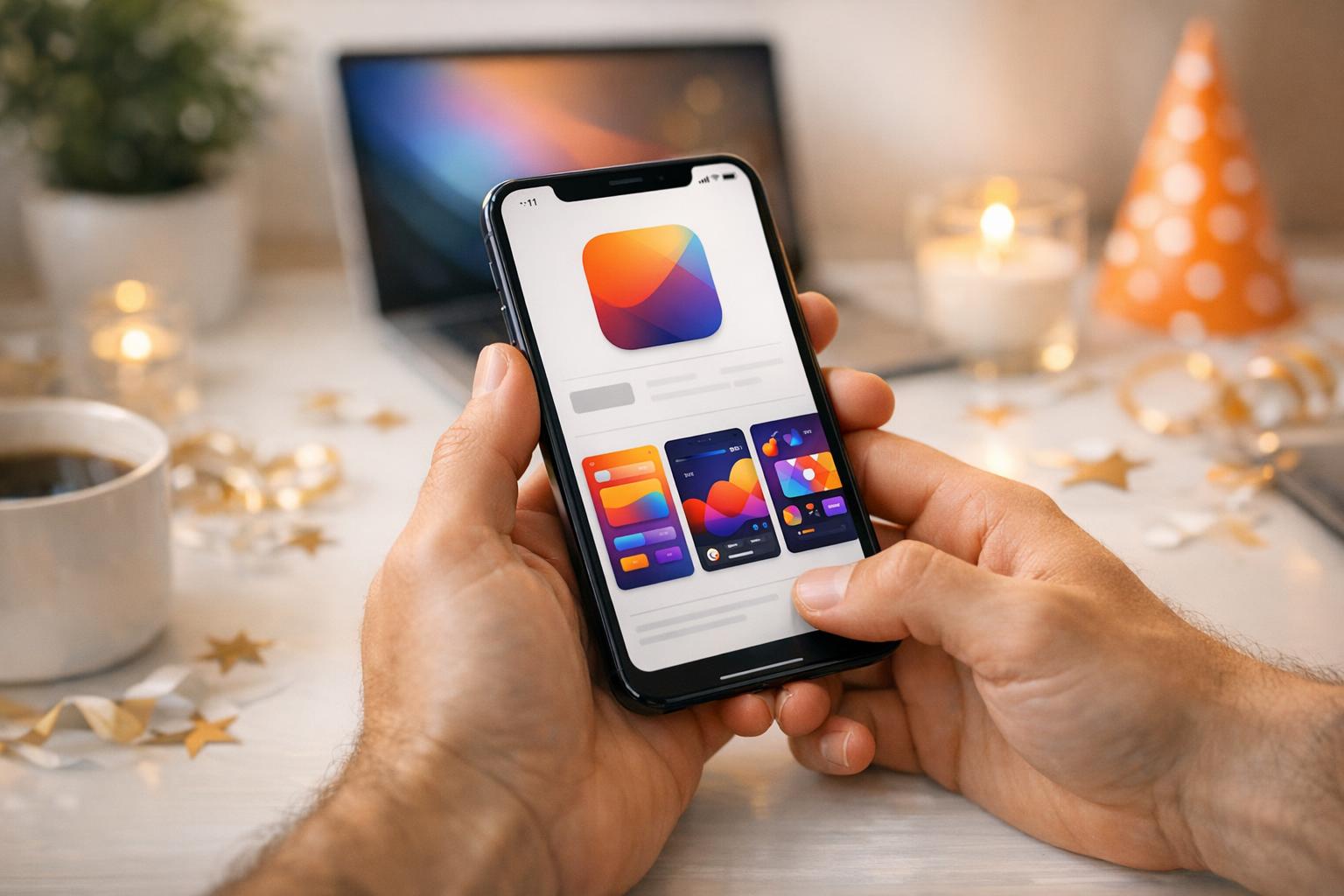
Plenty of guides tell you how to build an app. Far fewer walk you through the part that actually trips people up: getting it from "it works on my phone" to a live listing on the App Store. This guide covers the full journey — idea, build, TestFlight, and submission — and how to do it without hiring a developer.
The journey, end to end
Shipping an iPhone app has four real stages:
- Define the idea clearly enough to build.
- Build the app itself.
- Test it on a real device (usually via TestFlight).
- Submit it to the App Store and pass Apple's review.
Most people underestimate stages 3 and 4 — the signing, provisioning, and review process — which is exactly where projects stall. Let's go through each.
Step 1: Define your idea
Before any tool, write one sentence: "My app helps [who] do [what]." If you can't say it cleanly, the build will wander. Then list the core features and note any that need the iPhone's hardware — camera, AR, location, notifications — because those require a native app (more on that below).
Keep your first version small. A focused app that does one thing well is far easier to ship, test, and improve than an everything-app that never launches.
Step 2: Build the app
Traditionally this meant Swift, Xcode, and months of work — or paying a developer. That's no longer the only option. AI app builders can now turn a plain-English description into a working app.
The key choice here is native vs web. Many builders produce a web app or a wrapper, which limits device features and isn't a true native app. If you want a real iPhone app — one that uses Apple's native capabilities and behaves like a proper App Store app — you want a builder that generates real Swift, not a website in a shell.
Step 3: Test on a real device with TestFlight
TestFlight is Apple's official tool for testing apps before release. It lets you (and invited testers) install and run your app on real iPhones, so you can catch issues that never show up in a preview or simulator.
This stage matters more than people expect: features like the camera, AR, and notifications behave differently on real hardware. Getting onto TestFlight, though, normally requires the fiddly native plumbing — an Apple Developer account, signing certificates, and provisioning profiles — which is one of the biggest stumbling blocks for non-developers.
Step 4: Submit to the App Store
To publish, you'll need:
- An Apple Developer account (Apple charges an annual fee for this).
- App Store assets — name, description, icon, screenshots, privacy details.
- To pass App Store review, where Apple checks your app against its guidelines for quality, privacy, and functionality.
Review can reject apps for thin functionality, privacy issues, or broken features — another reason testing properly on TestFlight first pays off. Note also that Apple's guidelines don't allow apps that simply download and run new native code at runtime, which is part of why genuine per-app native builds are the correct path.
Doing all of this without a developer
The build is only one piece — the signing, TestFlight, and submission pipeline is what usually requires technical know-how. Orchard is designed to handle the whole chain. You describe your app in plain English, and Orchard generates a real native iOS app (actual Swift), then manages the native build, signing, and submission, shipping it straight to TestFlight and the App Store for you.
Because the output is genuinely native, your app can use Apple's full stack — camera, Vision, AR, LiDAR, NFC — and you can add AI features inside it with no API keys. You get the end-to-end path from idea to live listing without writing code or hiring a developer to handle the parts Apple makes complicated.
FAQ
Do I need an Apple Developer account to publish? Yes. Apple requires a Developer account (with an annual fee) to submit apps to the App Store.
What is TestFlight and do I have to use it? TestFlight is Apple's official testing tool for running your app on real devices before launch. It's strongly recommended — it's where you catch real-world issues before review.
Can I really get an app on the App Store without a developer? Yes. Tools like Orchard generate the native app and handle the signing, TestFlight, and submission steps for you, so you don't need to hire a developer or learn the process yourself.
How long does App Store review take? It varies, but it's typically a short window. Apps can be rejected for quality, privacy, or functionality issues, so test thoroughly first.
Want the full path from idea to App Store without a developer? Orchard builds a real native iPhone app from a plain-English prompt and ships it to TestFlight and the App Store for you.
Build your iOS app from a single prompt
Describe your idea — Orchard generates a real, native SwiftUI app and ships it to TestFlight. Free, no code, no Mac.
Generate your app →