How Much Does It Cost to Build an iPhone App in 2026? (Real Numbers)
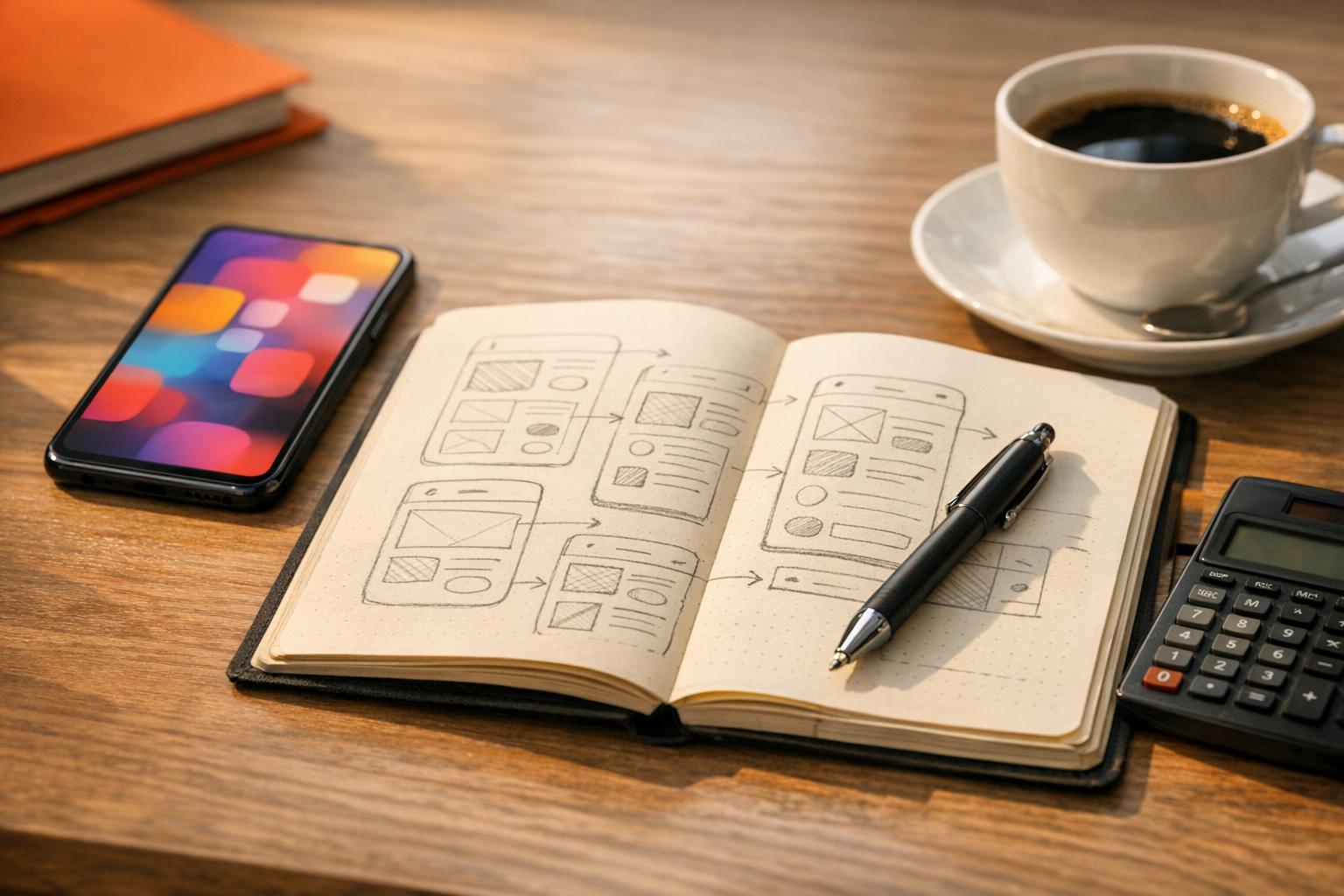
Ask ten developers what an iPhone app costs and you'll get ten different answers — because the honest answer is "it depends," and most guides stop there. This one won't. Below are the real 2026 ranges, what actually drives the price, the hidden costs nobody quotes upfront, and the newer option that changes the maths entirely for simpler apps.
The short answer
For traditional custom development in 2026, industry estimates cluster around these ranges:
- Simple app (a focused utility, a tracker, a basic booking tool): roughly $10,000–$40,000
- Medium-complexity app (accounts, payments, a backend, one polished user journey): roughly $40,000–$120,000
- Complex app (real-time features, advanced AI, marketplace mechanics, enterprise scale): $120,000–$500,000+
If those numbers feel high, that's because the total is never just "the coding." A full build includes product discovery, UI/UX design, the iOS development itself, backend and APIs, QA testing, and App Store submission — and vendors don't all quote the same scope, which is why estimates vary so wildly.
What actually drives the cost
Complexity, above everything. The number of screens, whether you need user accounts, payments, real-time data, and third-party integrations — each addition means more hours, and cost is fundamentally hours × hourly rate.
Who builds it, and where. This is the biggest lever after complexity:
- US/UK agencies: roughly $120–$300/hour — experienced teams and accountability at a premium.
- US/UK freelancers: roughly $75–$150/hour — cheaper, but you manage the project and carry the risk.
- Eastern European teams: roughly $40–$80/hour.
- South/Southeast Asian teams: roughly $20–$50/hour — the budget route, with added coordination overhead.
The same medium-complexity app might cost $150,000 with a US agency and under $50,000 offshore. Neither is "wrong" — you're trading money against management burden and risk.
Design and Apple's standards. Meeting Apple's Human Interface Guidelines, iterating on wireframes, and building custom UI isn't cosmetic — it's a meaningful slice of the budget, and skimping on it is a common cause of App Store rejection.
The hidden costs nobody quotes upfront
These routinely surprise first-time founders:
- Apple Developer Program: $99/year — mandatory to publish at all.
- Maintenance: typically 15–25% of the build cost every year for updates, bug fixes, and keeping pace with new iOS versions. A $60,000 app quietly costs another ~$10,000–$15,000 annually.
- Hosting and backend running costs for any app with accounts or data.
- Scope creep: the classic budget killer — "simple" mid-project additions like payments or messaging can force architectural rework and add weeks.
A sensible rule from experienced teams: get at least three quotes, confirm exactly what's in scope (backend? QA? submission?), and add a 15–20% buffer.
Why "app for free" searches lead to disappointment
The tools that promise free app building almost always produce web apps — websites wrapped to look like apps. They can't properly use the iPhone's camera, AR, sensors, or offline capabilities, and they aren't genuine native App Store products. If a real iPhone app is the goal, "free" typically means either a compromised result or a steep upgrade later. (We've broken down the difference in detail in our web app vs native app guide.)
The new option: AI-generated native apps
Here's what's genuinely changed by 2026. The cost structure above assumes humans writing every line of Swift. AI app builders now compress that dramatically — but most of them only generate web apps, which brings back the wrapper problem.
Orchard takes the other path: you describe your app in plain English, and it generates a real native iOS app — actual Swift/SwiftUI — then handles the whole pipeline through TestFlight to the App Store. Because the output is genuinely native, the app can use Apple's full stack (camera, Vision, AR, LiDAR, NFC), and you can add AI features with no API keys or backend to manage. Plans run at a monthly subscription — $39/month for Pro — rather than a five-figure project quote.
An honest framing of when each route makes sense:
- Traditional development still makes sense for large, complex, compliance-heavy products with big budgets and dedicated teams.
- An AI native-app builder like Orchard makes sense when you're a founder or business with a clear idea — especially in that "simple to medium" band where quotes run $10,000–$100,000 — and you want the real native version shipped fast without hiring anyone.
For a huge share of the app ideas people actually have, the honest 2026 answer to "how much does it cost?" has shifted from "tens of thousands" to "a monthly subscription and your own time describing what you want."
FAQ
How much does a simple iPhone app cost in 2026? With traditional development, roughly $10,000–$40,000 depending on team and location. With an AI native-app builder like Orchard, a monthly subscription replaces the project quote.
Why do quotes for the same app vary so much? Scope and geography. One quote may cover only design and frontend; another includes backend, QA, and submission. Hourly rates also range from ~$20 offshore to $300 at US agencies.
What ongoing costs should I budget for? Apple's $99/year developer fee, hosting, and typically 15–25% of the build cost per year in maintenance and updates.
Is it cheaper to build for iOS or Android? Costs are broadly comparable per platform; iOS has fewer devices to support, and iOS users spend significantly more in-app, which is why many founders launch iPhone-first.
Can I really get a native iPhone app without paying a developer? Yes — that's the newer category Orchard sits in: real Swift generated from a plain-English prompt, shipped to TestFlight and the App Store, no developer required.
Priced up a developer and winced? Orchard builds a real native iPhone app from a plain-English prompt — full Apple stack, shipped to the App Store, from $39/month.
Build your iOS app from a single prompt
Describe your idea — Orchard generates a real, native SwiftUI app and ships it to TestFlight. Free, no code, no Mac.
Generate your app →